
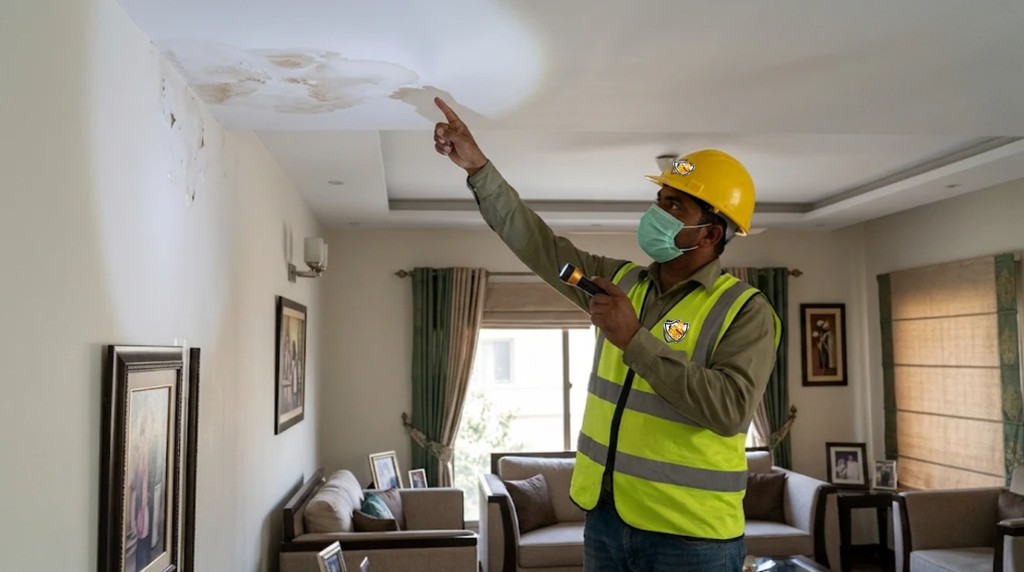
A wet patch on the ceiling after the first heavy shower is something almost every Lahore family has seen. Paint bubbles, the plaster turns soft, and a bucket ends up in the corner of the room. Proper roof leakage repair is not about filling one crack. It means finding where water actually enters, fixing that point, and protecting the whole slab so the problem does not come back next monsoon. This guide explains why roofs in Lahore leak, why patchwork keeps failing, and how waterproofing services in Lahore give a lasting result.
Why Roofs in Lahore Leak So Often
Lahore roofs take extreme summer heat, heavy monsoon bursts and winter dampness every year. This cycle opens cracks, weakens joints and lets water reach the slab.
Most houses in Lahore have flat RCC roofs. Older homes in areas like Samanabad, Garden Town and the Walled City often carry a thick layer of mud and brick tiles on top of the slab. Newer houses in DHA, Bahria Town and Johar Town usually have tiles or a plain screed. In both cases the slab expands in June when the roof surface crosses 60°C and contracts again on cold December nights. After a few years, this movement leaves hairline cracks that are almost invisible from the roof but let water through the moment the monsoon arrives.
Water is also patient. It enters at one point, travels along the slab or a steel bar, and shows up as a stain several feet away. That is why the damp patch on your ceiling is rarely directly under the real leak.
The Most Common Leak Points on a Flat Roof
Nine out of ten leaks start at a few weak spots: drains, parapet joints, tank bases and pipe openings. Checking these first saves time and money.
- Roof drains (parnala): leaves, plastic bags and dust from Lahore’s dry months block the drain, water stands on the roof and finds the nearest crack.
- Parapet wall joints: the corner where the boundary wall meets the slab cracks first because the two parts move differently.
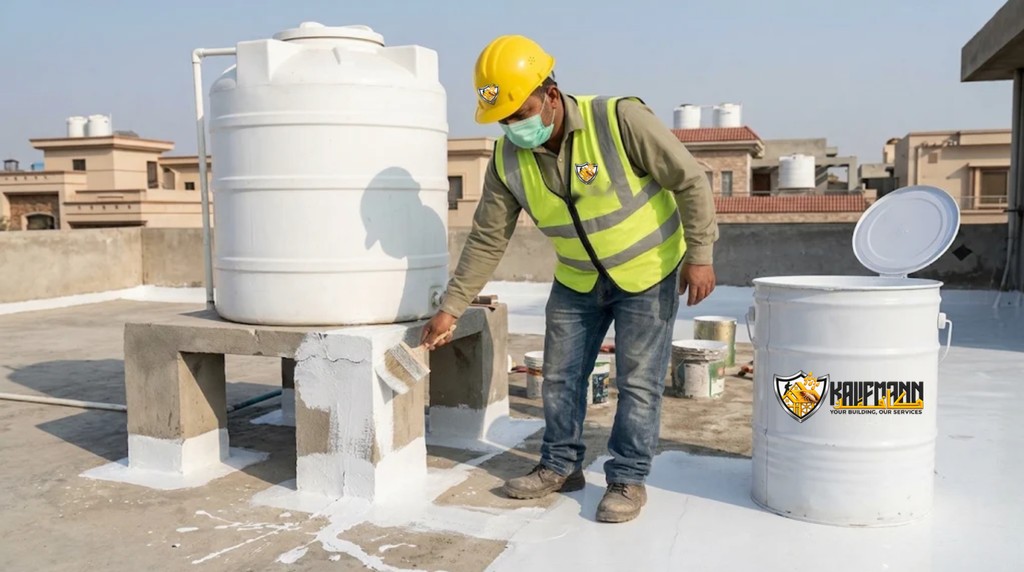
- Water tank bases: overflow, small leaks and the weight of a full tank keep this area wet for months.
- AC and solar panel fittings: holes drilled for brackets and pipes are often left unsealed.
- Old tile joints: missing grout between roof tiles lets water sit under the tiles and soak the slab below.
- Construction joints: where an extension roof meets the old roof, a gap almost always forms.
Why Patchwork Keeps Failing
Cement patches and cheap sealants cover the symptom, not the cause. They crack again within one season because they cannot move with the roof.
Many homeowners call a mason who fills the visible crack with cement or spreads a coat of ordinary paint. The ceiling looks fine for a few months. But plain cement is rigid. When the slab expands in the next summer, the patch separates from the old surface and a new gap opens right beside it. Market sealants have a similar problem: they are not designed for constant sun and standing water, so they peel and harden.
A real rooftop leakage solution treats the roof as one surface. That means opening and cleaning the cracks, sealing joints with flexible material, correcting the slope so water reaches the drain, and then covering the whole slab with a continuous waterproof layer. This is the difference between a quick fix and professional roof waterproofing.
How Professional Roof Leakage Repair Works
A trained team inspects first, repairs the weak points, then applies a continuous waterproof layer. Each step matters, and skipping one usually brings the leak back.
Here is how Kaufmann’s roof leakage repair in Lahore is carried out on a typical house:
- Inspection: the technician checks the ceiling stains from inside, then traces them on the roof, looking at drains, joints, tank bases and slope.
- Surface preparation: loose plaster, broken tiles, moss and old peeling coatings are removed and the roof is cleaned so the new layer can bond properly.
- Crack and joint treatment: cracks are widened slightly and filled with flexible repair material. Parapet corners and pipe openings get extra reinforcement.
- Drain correction: blocked or broken drains are opened and the area around them is sealed, because this is where water stays the longest.
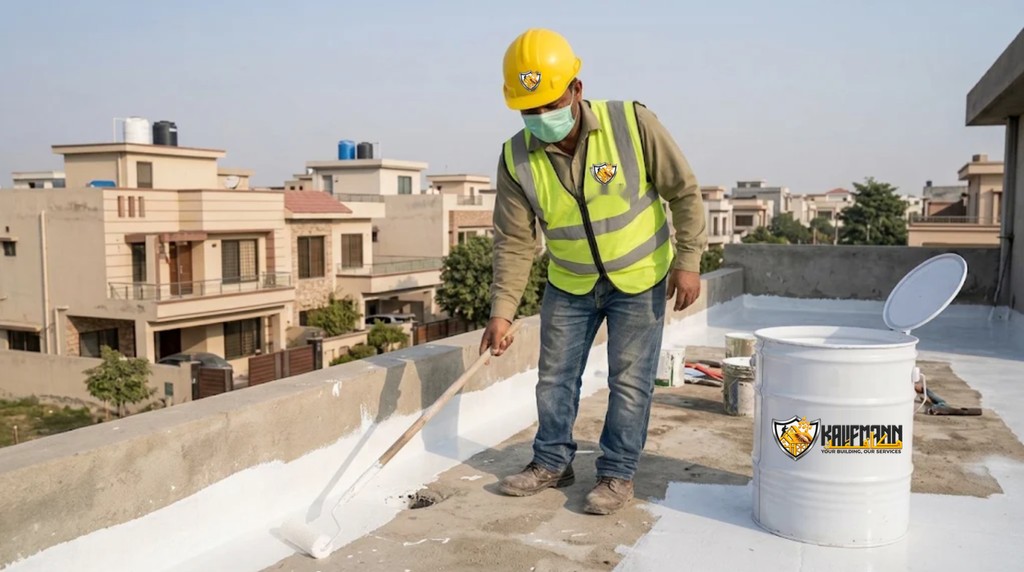
- Waterproof coating or membrane: the full roof is covered in layers, overlapping onto the parapet walls so no edge is left open.
- Water test: where possible, the roof is checked with water before the job is handed over.
The material depends on the roof. Exposed slabs often need a membrane, while tiled roofs may need joint sealing and a coating. A good roof waterproofing specialist explains this choice clearly instead of selling one product for every house.
Why Winter Is the Best Time to Fix a Leaking Roof
Dry weather from November to February lets the slab dry fully and lets coatings cure properly, so the repair is ready long before the monsoon.
Most people only remember the roof when water drips in July. By then the slab is wet, rain interrupts the work and every roof waterproofing company in the city is fully booked. In winter the roof is dry, the sun is gentle and the work can be done without hurry. If your ceiling showed stains last monsoon, now is the right time to book an inspection rather than waiting for the next storm.
Choosing the Right Roof Waterproofing Company
Look for a company that inspects before quoting, explains the method, uses proper materials and gives a written warranty on the work.
Before you hire anyone for roof waterproofing services, ask a few simple questions. Do they visit and inspect the roof, or quote over the phone? Do they treat drains and parapet joints, or only the cracks you can see? What warranty do they give, and in writing? A reliable team will answer these clearly. Kaufmann has been providing waterproofing services in Pakistan since 2006 for homes, plazas and factories, and our roof waterproofing services in Lahore start with a proper site inspection. You can also read about common waterproofing problems and how to solve them before your visit.
Frequently Asked Questions
1. How do I know where my roof is actually leaking?
The stain on the ceiling is often far from the entry point. A technician checks drains, parapet joints, tank bases and cracks on the roof to find the real source before any roof leakage repair starts.
2. Can I fix a roof leak with cement or paint myself?
It may stop the drip for a short time, but rigid cement and ordinary paint crack again with summer heat. Lasting results need flexible joint repair and full roof waterproofing.
3. How long does roof leakage repair take?
Most homes in Lahore are finished in one to three days, depending on roof size, the number of cracks and the drying time of the coating.
4. Is winter a good time for roof waterproofing in Lahore?
Yes. The roof is dry and coatings cure well. Booking waterproofing services in Lahore in winter means your home is ready before the monsoon.
5. Do you work on old roofs with mud and brick tiles?
Yes. Our roof waterproofing specialist team checks the tile layer and joints first, then recommends sealing, re-grouting or a full coating as needed.
6. Do you offer roof waterproofing for commercial buildings?
Yes. Kaufmann provides roof waterproofing services for houses, plazas, schools, warehouses and factories across Lahore and other cities.
Book a Roof Inspection in Lahore
Do not let another monsoon damage your ceiling, paint and furniture. Kaufmann’s team will inspect your roof, find the real source of the leak and give you a lasting roof leakage repair with a clear warranty. Call us, message us on WhatsApp, or fill in the form to book your roof inspection today.
Recent Comments