
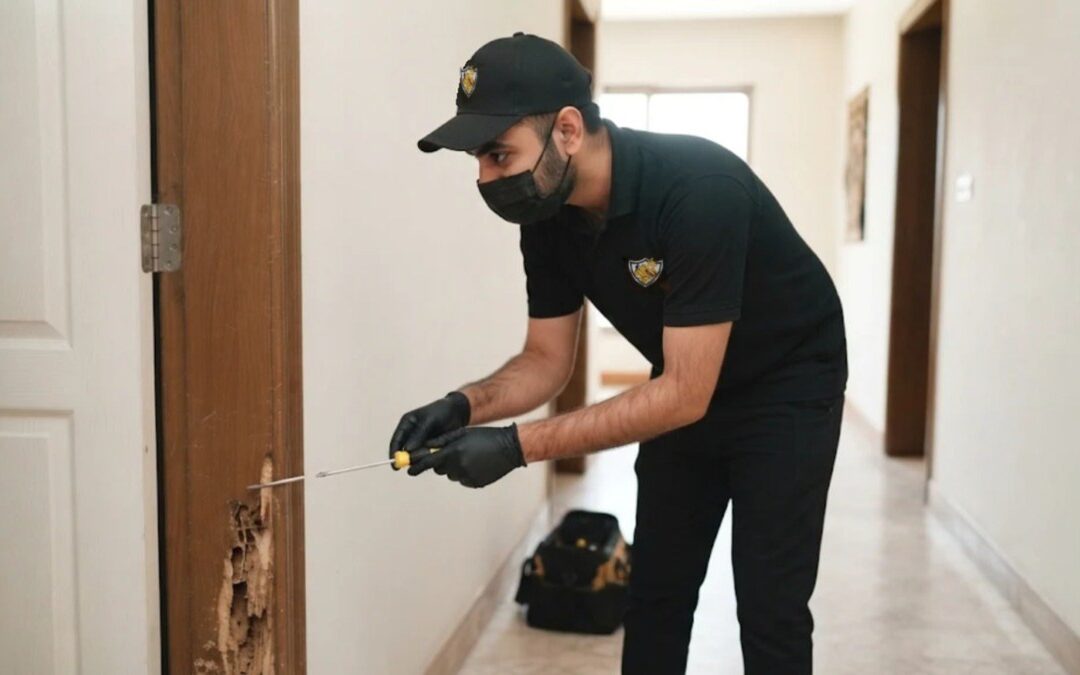
Termites rarely announce themselves. By the time most families in Rawalpindi notice a problem, the damage inside a door frame or a built-in wardrobe has often been building for months. The good news is that termites do leave clues. If you know the signs of termites, you can catch an infestation early, call for termite treatment on time and save your woodwork from costly replacement. This guide explains seven clear warning signs, where to look in a typical Rawalpindi house, and what professional termite control services actually involve.
Why Termites Are Common in Rawalpindi Homes
Rawalpindi has a mix of older houses in areas like Satellite Town, Saddar, Westridge and Chaklala, and newer homes in Bahria Town and DHA. Both face termite risk for different reasons. Older houses often have ageing wooden door frames, seepage in walls and cracks in floors that give termites an easy path. Newer houses may skip proper pre-construction soil treatment, so termites move in within a few years of construction.
The monsoon months add to the problem. Damp soil, roof leaks and bathroom seepage create the moisture subterranean termites need. They live in the soil, travel through tiny cracks and feed on fixed woodwork in the house. That is why regular checks and timely termite control in Rawalpindi matter so much.
7 Signs of Termites in Your Rawalpindi Home
1. Thin Mud Lines on Concrete Walls
The most common sign is a thin, dull, earth-coloured line running up a concrete wall, along the skirting area or near the foundation. These are mud tubes. Termites cannot eat concrete, so they build these narrow soil tunnels to travel safely from the ground to wood. If you break a small piece and see tiny white insects moving inside, the colony is active.
2. Hollow-Sounding Door Frames (Chaukhat)
Termites eat wood from the inside and leave a thin outer layer intact. Tap the lower part of your door frames with a screwdriver handle. Healthy wood sounds solid; damaged wood sounds hollow or papery, and sometimes the screwdriver sinks in. Door frames close to bathrooms and kitchens are usually hit first because of moisture.
3. Damage Inside Built-In Wardrobes
Built-in almirahs are a favourite target. Termites usually attack the inner frame and back panel first, where the wardrobe touches the wall. Empty one shelf and look at the back corners and the base. Soft, crumbling wood, soil patches or damaged clothes and papers stored inside are strong warning signs.
4. Discarded Wings Near Windows and Lights
After rain, especially in spring and the monsoon, flying termites (swarmers) leave a mature colony to start new ones. They are attracted to light and drop their wings soon after. Small piles of identical, see-through wings on windowsills, near tube lights or by the main door mean a colony is nearby. Read more in our guide on flying termites in your house.
5. Soil Patches on Wooden Surfaces
Termites seal any opening they make with soil and saliva. You may notice small mud patches or dirt-filled cracks on door frames, skirting wood, cabinet bases or wall panelling. Many people wipe these away as dust, but they keep coming back in the same place because the termites are working underneath.
6. Bubbling Paint or Sagging Wood
Paint on wooden frames or panels may start bubbling, cracking or peeling in a wavy pattern. This happens when termites hollow out the wood and moisture collects under the paint. In advanced cases, wooden panels sag, kitchen cabinet bases feel soft, and wall woodwork bends under light pressure.
7. Doors and Windows That Suddenly Stick
If a door or window that closed smoothly now jams, termite damage may be the cause. As termites eat the frame, the wood loses its shape and the moisture they bring makes it swell. Combined with any of the signs above, a stiff door is a clear reason to book an inspection.
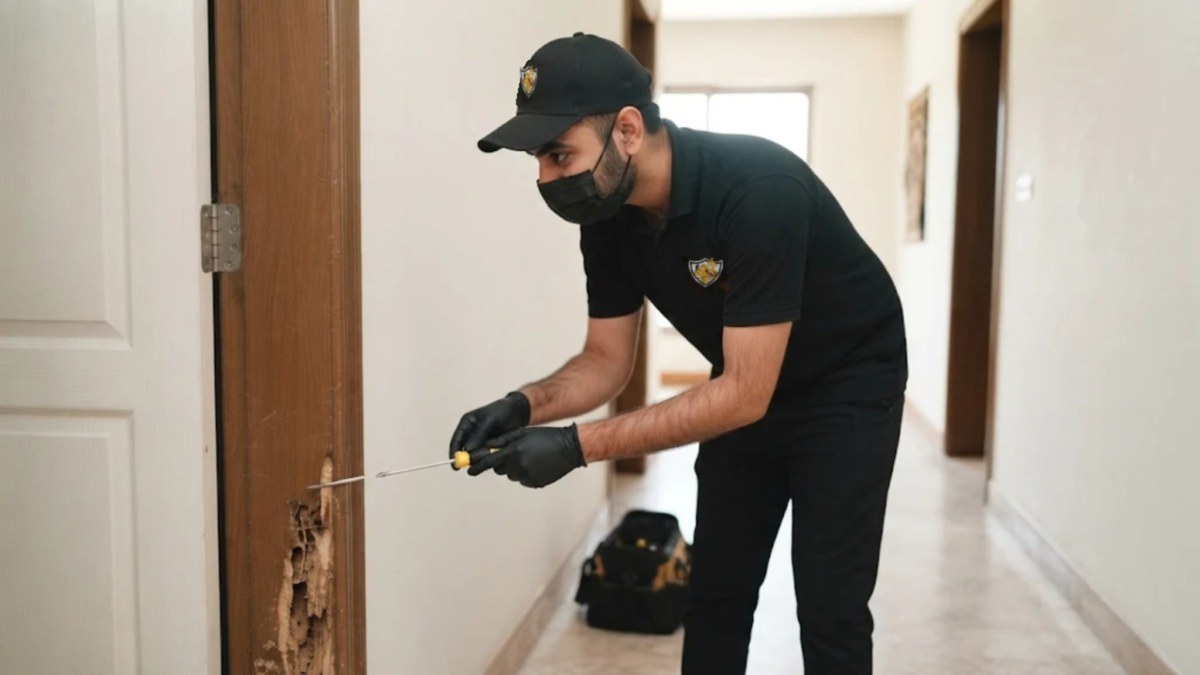
Where to Check: A Quick Room-by-Room List
- Main door and room door frames, especially the bottom 2 feet.
- Built-in wardrobes: back panel, base and inner frame.
- Kitchen cabinets, mainly under the sink and near the wall.
- Bathroom door frames and any wooden panelling near wet areas.
- Concrete walls along the floor, staircase walls and the porch for mud lines.
- Store rooms where old boxes, papers and wood are kept.
Termites attack fixed building wood. Loose furniture such as beds and sofas usually suffers from wood borer, which is a different problem with a different treatment.
What to Do When You Spot Signs of Termites
- Do not break all the mud tubes or spray household insect killers. This only pushes the colony to another part of the house.
- Take clear photos of the damage and note which rooms are affected.
- Fix leaking pipes and seepage, since moisture keeps termites active.
- Book a professional inspection as soon as possible. Early anti termite treatment protects more of your woodwork.
How Professional Termite Treatment Works
Home remedies may kill a few visible termites, but the colony lives in the soil under your house. Real termite control creates a chemical barrier between that colony and your woodwork. Kaufmann's deemak control services follow a clear process:
- Inspection: the technician checks door frames, wardrobes, kitchen cabinets and walls to map where termites are active.
- Floor drilling and injection: small holes are drilled vertically along the walls, about 2 to 3 feet apart, and termiticide is injected into the soil below.
- Woodwork treatment: infested door frames and wardrobes are injected with a micro drill and the wood surfaces are sprayed.
- Neat finish: drilled holes are filled flush with tile-matched grout so the floor looks clean.
For new construction, soil treatment before the foundation is laid (pre-construction termite proofing) is the most effective long-term protection.
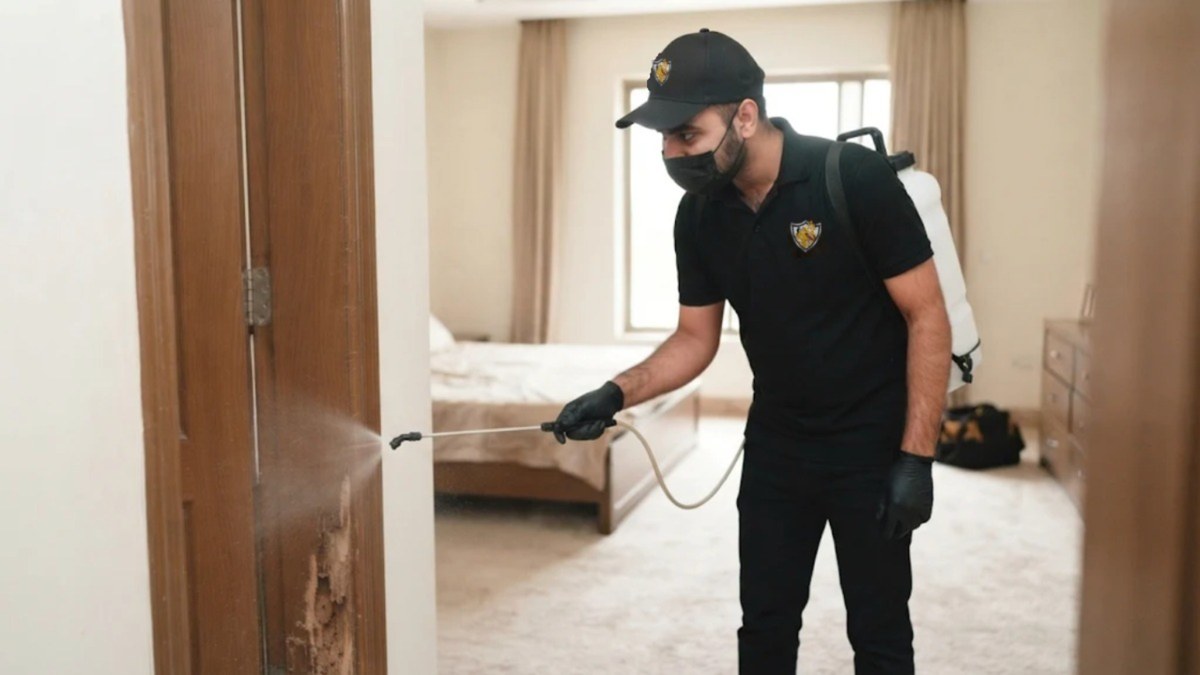
Termite Control in Rawalpindi by Kaufmann
Kaufmann has provided termite treatment for homes and commercial buildings since 2006. Our trained teams work across Rawalpindi, from older neighbourhoods to Bahria Town and DHA, using registered chemicals and a proper drilling and injection method. If you are searching for termite control near me, our termite control services in Rawalpindi page explains the service in detail, and our termite control services page covers every city we serve.
Frequently Asked Questions
What are the first signs of termites in a house?
The earliest signs are thin mud lines on concrete walls, discarded wings near windows after rain and door frames that sound hollow when tapped.
Can I get rid of termites myself?
Sprays and home remedies only kill visible termites. The colony in the soil survives, so professional termite treatment with soil injection is needed for lasting results.
Which parts of a house do termites attack first?
They usually start with door frames near bathrooms and kitchens, built-in wardrobes and kitchen cabinets, because these are fixed wood close to moisture.
Is termite treatment safe for my family?
Yes. The chemical is injected into the soil and wood, not sprayed into the air of living spaces. Your technician will tell you when rooms can be used again.
How long does termite treatment take?
Most houses are treated in one day. Larger houses or heavy infestations may need more time, which is confirmed after the inspection.
Do new houses in Rawalpindi need termite proofing?
Yes. Pre-construction soil treatment is the best protection. If it was skipped, post-construction drilling and injection can still protect the house.
Seen any of these signs? Do not wait for the damage to spread. Book an inspection with Kaufmann for professional termite control in Rawalpindi today.
Recent Comments